
Ector County Sex Offender Checks
The Texas Public Sex Offender Registry is the main statewide source. Texas DPS receives registration data from local law enforcement and makes most adult registration information public under Code of Criminal Procedure Chapter 62. Ector County residents can search by name or geography, inspect a map or list, and open a public profile. A full name helps, but location fields are often more useful for community awareness. Similar names can refer to different people, so compare the public photo and other profile facts before drawing any conclusion.
No separate, complete ECSO public registry database was documented. If the state interface fails, use the U.S. Department of Justice national search, call the Ector County Sheriff's Office, or ask Odessa Police about a city address. Local agencies can explain registration procedures and receive reports of suspected noncompliance. They do not provide a general criminal-history report through the registry.
The official DPS search screen shows how Ector County registry searches begin. Open the Texas registry source before reviewing the captured interface.
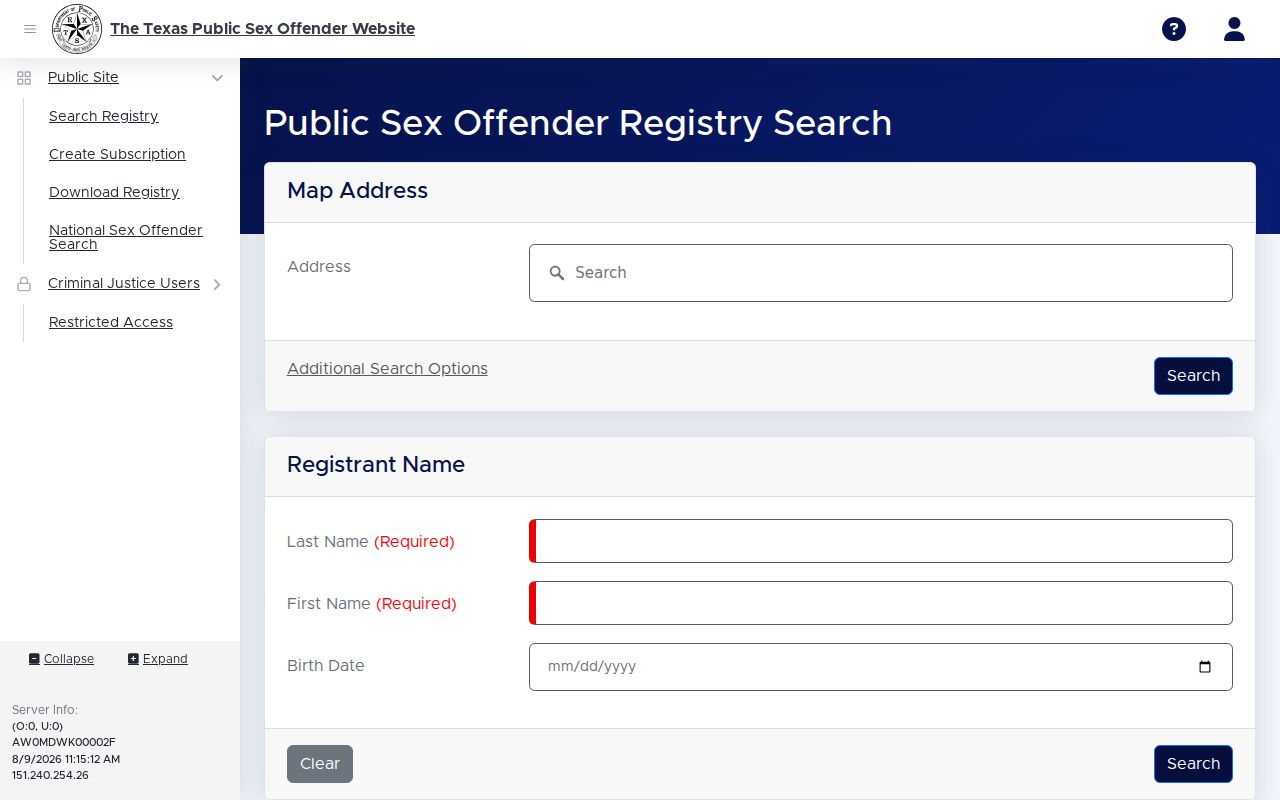
The form supports identity and place-based routes without displaying a private profile in the captured image.
Texas Public Sex Offender Registry Searches
The registry is free and does not require a public account. Its dynamic interface can change, and exact radius options were not visible during research. Use only the choices the live page displays. A sound search moves from broad location filters to profile details, then checks the status again if the information will guide a safety plan.
- Open the Texas DPS registry and read its conditions of use.
- Choose a name or geography mode. Add Ector County, Odessa, Goldsmith, a ZIP code, or a street address as the live form permits.
- Review the map or list and compare the available identity fields. Do not rely on a name alone.
- Open the matching profile, read its registration agency, status, verification date, offense, and duration information, then recheck when current location matters.
| Field Label | Type | Required | Notes |
|---|---|---|---|
| Search by | Tabs or mode | One mode | Name, address, geography, or another live option |
| Last and first name | Text | Mode-dependent | First name narrows common or partial last-name results |
| Address | Text | Address mode | Used for proximity searching |
| City, county, ZIP | Text or select | Optional | Use Ector, Odessa, Goldsmith, or a known ZIP |
| Radius | Select | Address mode | Use only options shown on the current form |
| Map or list | View controls | No | Changes how geographic results appear |
Ector County Registry App Access
The official Odessa Police Dept. app advertises sex-offender access alongside alerts, crime maps, direct tips, events, contacts, and social posts. It is a supplemental city tool, not the source of the statewide record. The app does not advertise a jail roster, warrant search, or report-copy ordering system. Readers outside Odessa should begin with DPS and the law enforcement agency that registers the address.
The official app listing provides a view of the city tool available to Ector County residents. Review the Odessa Police app source for current features.
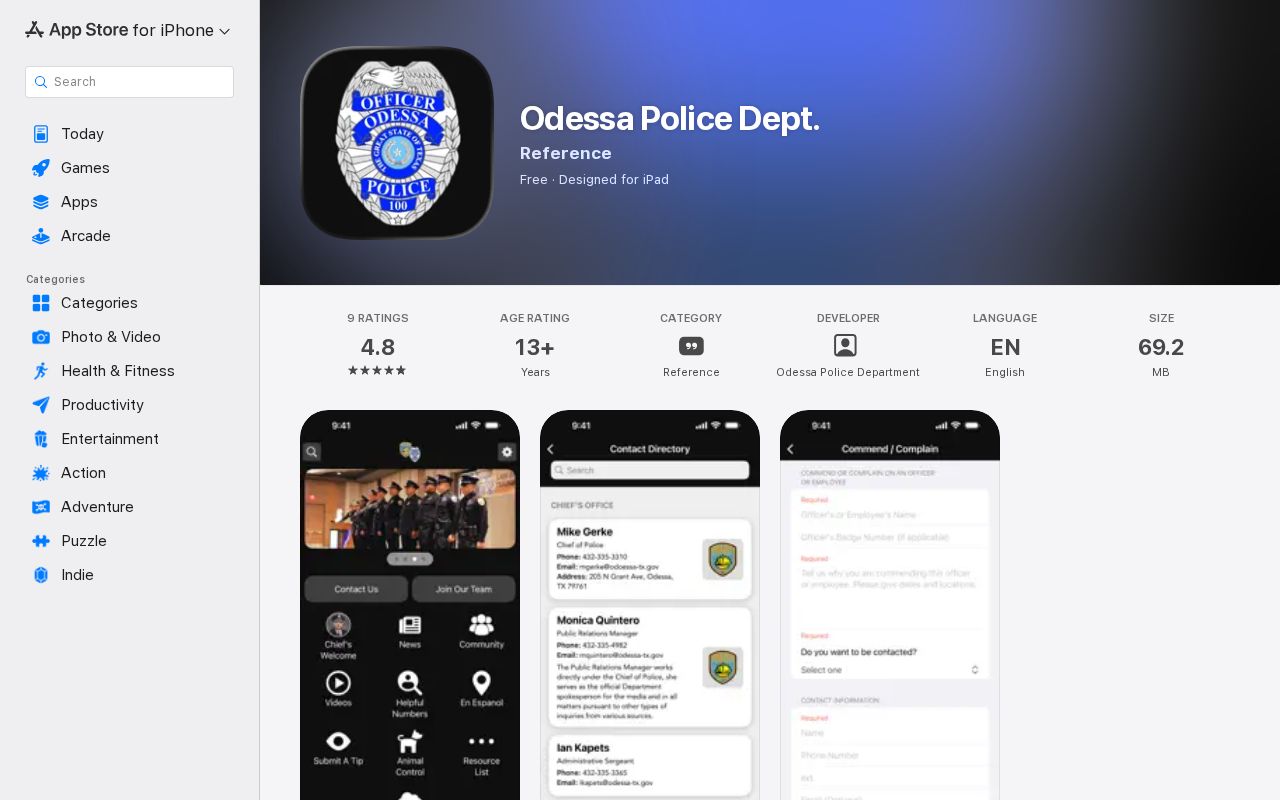
The app adds a mobile route, but DPS remains the authoritative public registry and emergencies still require 911.
Registry Profiles: What They Show
An official profile joins identification facts with the legal duty to register. It may show a recent photograph, physical descriptors, address or geographic residence information, the registering agency, compliance state, a verification date, offense facts, and a duration indicator. Vehicle or institution data may also appear when Chapter 62 makes it public. The entries reflect registration law. They are not a full list of every arrest, charge, court filing, or disposition connected to a person.
| Name and aliases | Published identity names used to distinguish records. |
|---|---|
| Photo and description | Recent image plus available age or birth-date treatment, height, weight, hair, eyes, and marks. |
| Residence information | Public address or geographic residence detail allowed by law. |
| Offense information | Description, statute, conviction or adjudication date, and victim age category when public. |
| Registration duty | Registering agency, duration indicator, status, and verification date. |
| Other public fields | Qualifying vehicle or institution information when shown. |
Compare the agency and verification date with the residence. A status is a snapshot. Registration facts can change after a move, new verification, agency correction, or court action.
Private Ector County Registry Fields
DPS collects more than it releases. The public cannot see Social Security numbers, driver-license numbers, telephone numbers, online identifiers, employer contact information, victim identity, additional DPS-only data, or juvenile registration that a court has ordered nonpublic. A blank public field does not prove the agency never collected it. It may instead mark a statutory boundary.
The Texas Sex Offender Registration Program overview explains the state and local roles behind those records.
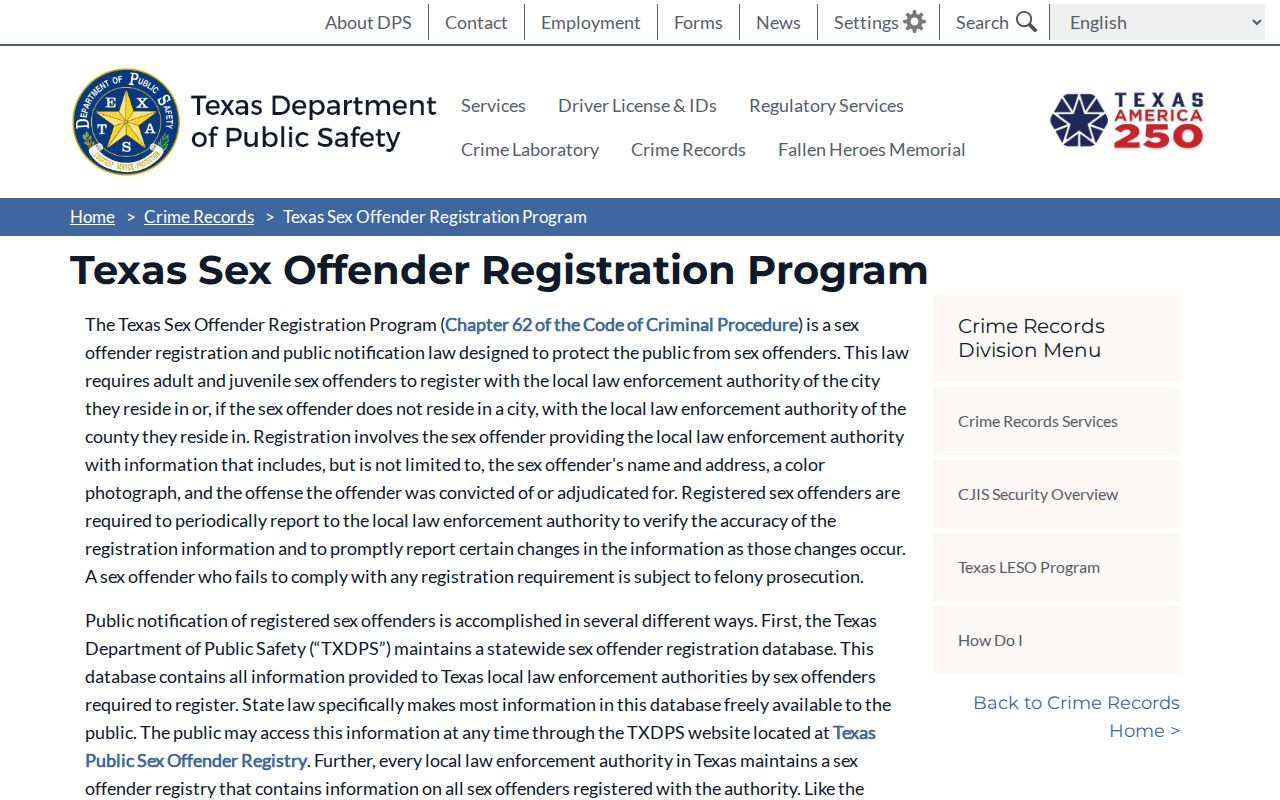
The program page supplies context that a result card alone cannot show, including registration and notification functions.
Note: A registry profile is narrower than a court case file or a fingerprint-based review of one's own Texas criminal history.
Registration Levels and Duties in Texas
Texas does not use a simple public Tier I, II, and III schedule with fixed 10, 25, and life terms. Chapter 62 links the duty to the reportable offense, adjudication, age, and other statutory provisions. Many duties last ten years after the defined release, discharge, or supervision point. Listed serious, repeat, and sexually violent offenses can require lifetime registration. Risk assessment may affect notice, yet risk is not the same as duration.
| Texas concept | Duration or effect | Public meaning |
|---|---|---|
| Ten-year duty | Ten years after the statutory start point | Not automatically measured from conviction date |
| Lifetime duty | Lifetime for listed serious or repeat categories | Depends on Chapter 62 offense rules |
| Risk assessment | Affects some notice decisions | Does not replace the legal duty or duration |
| Verification schedule | Varies by statutory category | Some lifetime or high-risk registrants report more often |
Read the duty shown on the actual profile and consult Chapter 62 for the legal rule. A broad label cannot answer when the period began or whether a special provision applies.
Ector County Cross-State Searches
The National Sex Offender Public Website provides a second official layer when a name, move, trip, or family safety question crosses state lines. NSOPW joins participating jurisdiction searches. It can also reflect a state system's outage or delayed response, so no result should be read as proof that no duty exists. When Texas data matters, return to DPS and the responsible local agency.
The federal search page illustrates that cross-state route without centering an identifiable Ector County registrant. Open the NSOPW source to review its current search conditions.
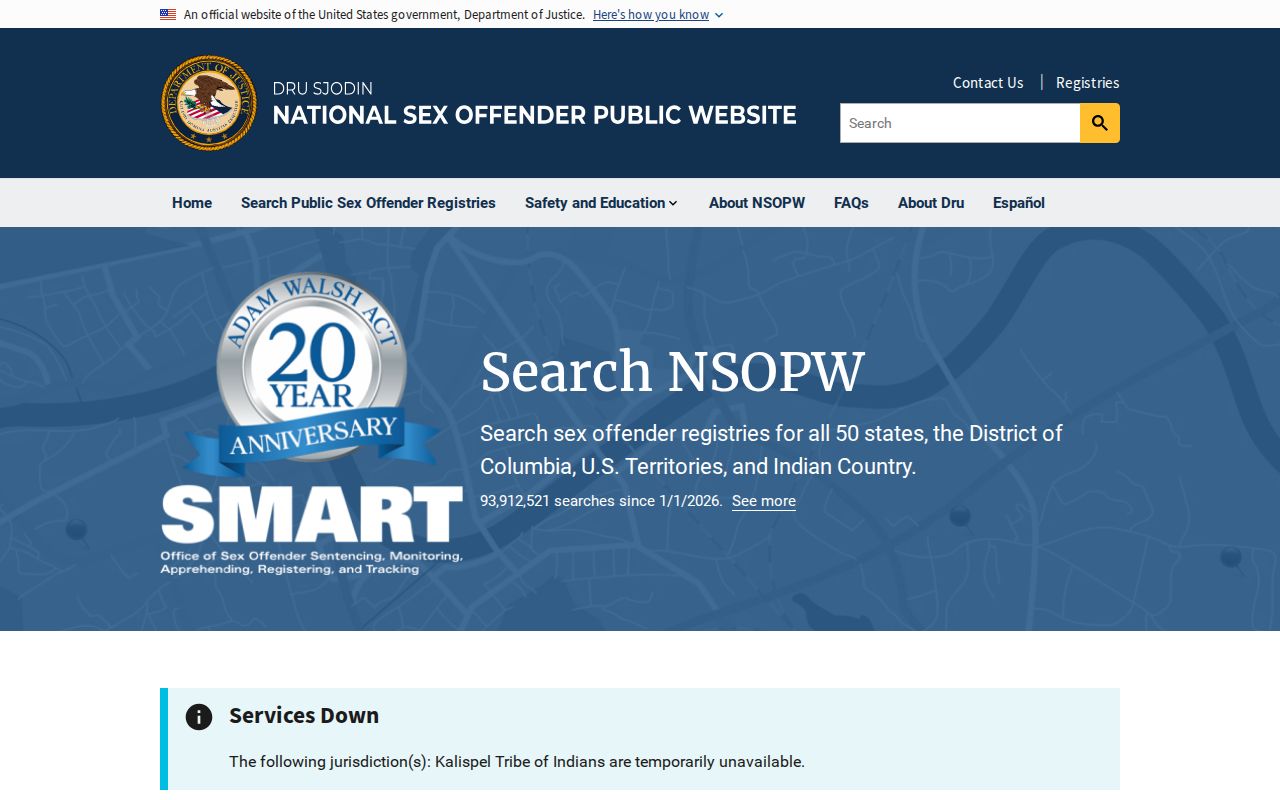
The national layer is a fallback and comparison tool, not a replacement for the Texas profile or local compliance office.
Report Ector County Registry Concerns
For suspected noncompliance in unincorporated Ector County, call ECSO at 432-335-3050 and explain the address or status concern without confronting anyone. For an Odessa city address, contact Odessa Police. Give the agency enough clear facts to route the report, but do not spread unverified claims online. Officers, not members of the public, determine whether a reporting duty was missed or whether an investigation is needed.
If the concern is merely that the state interface will not load, try NSOPW, wait and recheck DPS, then call the responsible agency for its procedure. An interface error is not evidence of noncompliance. For an immediate threat, call 911.
Using Registry Information Lawfully
Registry information exists for public safety awareness, school and community notice, and careful planning. It should be used to understand a listed registration status and to choose reasonable safety steps. It should not be treated as permission to contact, follow, shame, threaten, or punish a registrant or anyone in the household. Recheck the official record because addresses and status can change.
Texas may send postcards when a high-risk registrant or civilly committed sexually violent predator enters a community. Local authorities may use other notice methods allowed by law. That formal process is distinct from rumors or reposted screenshots.
Registry Misuse Is a Crime: Texas Code of Criminal Procedure Chapter 62 warns against using registry information to threaten, intimidate, or harass a registrant or household. Use official Ector County channels for safety concerns.